Spider Solitaire
- 4.7
- Rating
- 5.00M
- Installs
- Free
- Price

 Analysis by App-foxy
Some games ask for your full attention, while others are better suited to the small spaces between everyday tasks. Spider Solitaire belongs firmly in the second group. I spent time with this board game expecting a familiar card pastime, and that is exactly what I found: a quiet, focused experience built around arranging cards, spotting patterns, and deciding when a move is worth the risk. It does not try to turn solitaire into an adventure or surround it with unnecessary distractions. Its appeal is the steady mental rhythm of one layout after another.
That simplicity is also the reason I can imagine recommending it to a friend. If you want something you can pick up for a short break, play without an internet connection, and leave whenever you need to, this version makes a sensible choice. It is free, aimed at Everyone, and developed by Classic Puzzle Games Maker. The game has reached over five million installs, with a 4.7 average from around thirty thousand ratings, so it is clearly serving a large audience rather than being an obscure experiment.
A quiet card table for short, focused sessions
I found the appeal of this card table is less about escaping into a new world and more about having a small, orderly problem to return to between tasks. In this section, I look at how its familiar layout supports short sessions, while also considering when a round needs more attention than a quick break allows.
You May Also Like

 Blood Strike: 2.5 Anniversary
Blood Strike’s Loadouts Turn Every Drop Into a Tactical Gamble
A close look at Blood Strike’s custom loadouts: how fast access to signature weapons reshapes its battle royale rhythm, rewards preparation, and narrows the gap between fights.

 Pandora - Music & Podcasts
Pandora’s Music Is Easy to Start, but Harder to Recover
Pandora’s strength is its low-effort path from a seed to a station. Its weak spot is how much confidence it asks you to place in connection, setup, and quiet recovery.

 8 Ball Pool
 Is Built on Rivalries, Rematches, and Routine
A close look at the rivalries, rematches, shared routines, and unanswered safety questions that turn a quick pool match into a persistent mobile community.

 Samsung Music
’s Quiet Strength Is Playing What You Already Own
Its reach comes less from spectacle than from dependable access to a personal library. That simplicity is both the app’s strongest retention engine and its ceiling.

 AccuWeather: Weather Radar
AccuWeather Review: A Quick, Clear Forecast for Everyday Decisions
For everyday plans, the best forecast is the one you can understand quickly. AccuWeather makes rain timing, radar, and local conditions easy to act on, with a few trade-offs.

 Hill Climb Racing
Why Hill Climb Racing Still Turns Crashes Into One More Run
A tiny car, a bumpy hill and one more upgrade: Hill Climb Racing keeps resurfacing because its simple chaos makes every near-miss feel personal.
More From Our News Desk



The first few minutes feel familiar for the right reasons
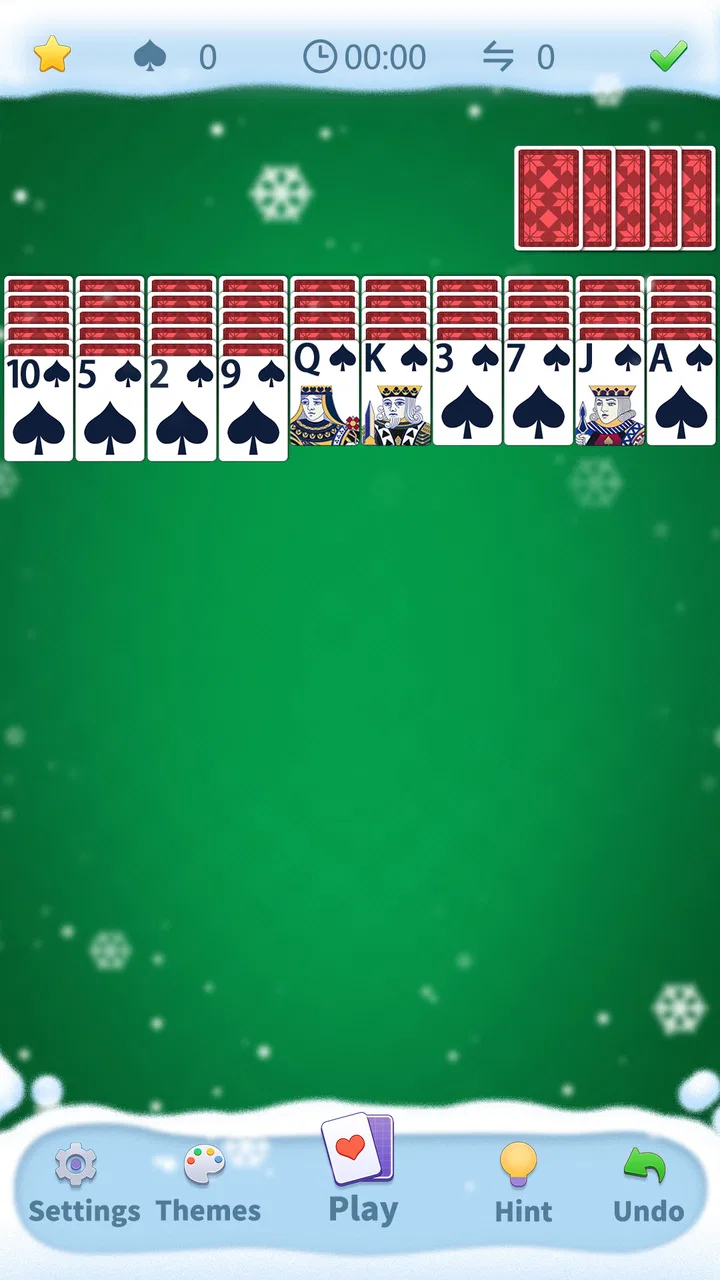
My first impression was not about novelty. Spider Solitaire works because the basic presentation gets out of the way and lets the card layout become the main event. You are looking at a compact puzzle rather than a busy game screen, and that makes it easy to understand what deserves attention: exposed cards, blocked sequences, empty spaces, and the next useful move.
That clarity matters more than it may sound. A card game can become tiring when the interface competes with the puzzle, but this one is comfortable as a casual mental exercise. I could begin a round without needing a tutorial-style explanation of a fictional setting or a long sequence of introductory screens. The familiar format gives experienced players an immediate foothold, while people returning to solitaire after years away can learn by following the visible arrangement.
The game is especially easy to fit into a routine. I can imagine opening it while waiting for an appointment, during a quiet commute when playing is safe and practical, or at home after dinner when I want something more engaging than scrolling. A realistic session might begin with the intention of playing for five minutes, continue through a few thoughtful moves, and end as soon as another task calls. That stop-and-start quality is one of its strongest qualities.
It is worth setting expectations correctly, though. This is not a story-driven board game, a competitive card battler, or a social experience. There is no reason to install it if you want character progression, dramatic challenges, or interaction with other players. Its value comes from concentration and repetition. For me, that narrow purpose is a strength, but it will feel limited to anyone looking for a broader game.
What the card layout communicates without explanation
The visual language is restrained. Cards, columns, and available spaces carry most of the information, so I rarely felt the need to decode a complicated screen. That makes the game approachable for a wide age range, which fits its Everyone content rating. It also makes it a reasonable choice for someone who wants a puzzle that exercises attention without presenting itself as an educational tool.
Good solitaire design depends on visual hierarchy. I need to see which cards are available, which sequences are already organized, and where a move could open the board. When those relationships are easy to scan, the game feels thoughtful rather than frustrating. Here, the classic card-table structure creates a clear mental map. I can pause, inspect the arrangement, and plan several moves instead of tapping randomly.
The art direction does not attempt to create a literal world, and that is an important distinction. Its “setting” is the card table itself: a small, self-contained space where order gradually emerges from a tangled opening. The lack of a narrative backdrop keeps the mood calm. I am not being asked to imagine a kingdom, solve a mystery, or follow a character. The cards provide the entire visual story, moving from clutter toward completion.
That approach also helps the game age well. Decorative trends can make a title feel dated quickly, while a clean card arrangement remains recognizable. The trade-off is that players who enjoy elaborate themes may find the presentation plain. I would choose this style when I want the puzzle to remain central, but I would look elsewhere for a more expressive visual identity.
Why the atmosphere works without a dramatic setting
The most coherent part of the experience is the relationship between its limited setting and its purpose. A solitaire round is naturally solitary, and the game does not fight that mood. The screen feels like a private tabletop rather than a stage. That makes it suitable for winding down, provided I am in the mood for gentle concentration rather than complete rest.
There is a useful difference between relaxing and mindless. I still need to evaluate choices, and a careless move can make the remaining layout harder to manage. That small amount of pressure keeps the session from becoming empty. At the same time, the game does not require the emotional investment of a competitive match. I can focus on the current arrangement, make a mistake, and simply start thinking from the new position.
One practical benefit is that the offline nature suits this atmosphere. I can use it in places where a connection is unreliable, and the game does not need a larger online context to make a round meaningful. For a phone game, that makes a difference: it becomes a dependable fallback rather than an app that only works when everything around me is connected.
Sound, silence, and the pace of a round
The sound design is best understood as support rather than a headline feature. A solitaire game needs room for thought, and an overactive soundtrack would work against that. The overall mood is therefore quiet and measured, matching the visual restraint. I never felt that the game was trying to manufacture excitement where the mechanics did not need it.
That calm pacing is one of the reasons I would use it late in the day. The game gives me a sequence of small decisions instead of a constant stream of urgent events. I can inspect the columns, consider whether to expose a hidden card or preserve a sequence, and let the next move emerge at my own speed. The rhythm comes from thinking, not from timers or dramatic interruptions.
There is a subtle risk in this design: a slow, quiet card game can feel repetitive if every round is approached in exactly the same way. I found that the pacing remains interesting when I treat each layout as a planning exercise rather than chasing quick taps. If I rush, the game becomes a routine. If I pause to look for the move that creates the most future options, it becomes more satisfying.
For that reason, I would not describe it as a game for every kind of break. If I have only a few seconds, opening a round may not be worthwhile. If I want a burst of energy, a fast arcade game will provide more immediate feedback. This title is at its best when I have enough quiet time to let a pattern develop.
The mechanics reward planning more than speed
Spider Solitaire’s central pleasure comes from managing order. The important decision is rarely just “Can I move this card?” It is closer to “What will this move make possible later?” That distinction gives the game more depth than its simple appearance suggests. A move that clears one visible obstacle may also occupy a useful space, break up a promising sequence, or leave fewer options for the next stage.
I found it helpful to treat empty spaces as strategic resources instead of automatic invitations. Opening room can be valuable because it gives flexibility, but using that room too early may not solve the real problem. Likewise, building a neat-looking sequence is not always the same as making progress. Sometimes the better choice is the one that exposes information, even if the layout looks less tidy for a moment.
This is where the game becomes more than a way to pass time. It encourages me to think in terms of consequences, reversibility, and opportunity. Before moving a stack, I look at what card will be uncovered, which column will become restricted, and whether I am preserving enough room to reorganize later. Those habits are useful for players who enjoy logic puzzles but do not want a formal brain-training program.
A practical tip is to scan the entire tableau before making the first obvious move. The most attractive action is not always the most useful one. I also try to prioritize moves that reveal a hidden card or create a new arrangement, while avoiding unnecessary disruption to a sequence that may be valuable later. This is not a guaranteed formula for winning, but it makes the game feel more deliberate and reduces the sense that outcomes are purely accidental.
How it compares with other casual card choices
Compared with standard Klondike Solitaire, Spider Solitaire usually asks for more patience because organizing cards is itself a larger part of the challenge. Klondike can feel quicker and more immediately familiar, making it a better pick when I want a very short, traditional round. Spider Solitaire suits me more when I want to study a layout and make a chain of connected decisions.
Compared with FreeCell, the experience feels less like a fully visible logic problem and more like a balance between planning and managing what is revealed. FreeCell can appeal to players who prefer to see nearly all the information from the beginning. This game is a better fit for someone who enjoys adapting as the tableau opens and new possibilities appear.
It also differs from modern card apps that add missions, collectible systems, social rankings, or elaborate themes. Those alternatives may provide more long-term variety, but they can also make a simple session feel like part of a larger obligation. Here, I can play without needing to maintain a streak or pursue a separate progression loop. The trade-off is less variety outside the core puzzle.
The choice between them depends on the kind of attention I want to spend. This game is strongest when I want a focused, offline board-game experience with a familiar structure. I would choose another option if I needed multiplayer competition, a campaign, accessibility customization that is essential to my play, or a more visually dramatic presentation.
Small habits that make the experience better
I get more from the game when I use it intentionally. Rather than opening it automatically whenever I am bored, I treat a round as a short reset between tasks. That keeps the quiet pacing refreshing instead of turning it into background noise. It also helps me stop at a natural point instead of letting a casual break expand indefinitely.
Another useful habit is to separate “progress” from “appearance.” A layout can look more organized while actually becoming less flexible. I try to ask whether a move increases the number of future choices, not merely whether it makes one column look cleaner. This simple question changes how I read the board and gives experienced players a way to keep familiar rounds mentally engaging.
When a position becomes difficult, I avoid tapping through moves just to see what happens. I review the columns, identify the cards that are blocking access, and consider whether an empty space should be saved. If I reach a dead end, restarting is not a failure; it is part of learning how the arrangement behaves. The game works well for this kind of low-pressure experimentation because the cost of trying again is small.
Players should also remember that offline play is convenient, not magical. It makes the game suitable for disconnected moments, but it does not transform a poor layout into a solvable one or remove the need for careful choices. I appreciate the independence from a network, yet I still judge each round by the quality of its decisions rather than by the convenience of opening it anywhere.
Who will enjoy it, and who should skip it
I would recommend it to people who like classic card puzzles, quiet solo activities, and games that can be played in flexible sessions. It is a good companion for someone who wants to sharpen observation and planning without committing to a long campaign. It may also suit players who prefer a familiar board-game format over a game filled with notifications, characters, and layered menus.
It is less suitable for anyone who needs constant novelty. If your ideal mobile game includes changing environments, unlockable content, competitive matchmaking, or a strong sense of progression, this may feel too narrow. The same is true if you want a social card table. Its solitary design is intentional, but that means it cannot replace a multiplayer game or a face-to-face card session.
The free price lowers the barrier to trying it, and the Everyone rating makes it easy to consider for a shared household device. I would still approach it as a personal puzzle rather than a family party game. Two people can discuss a move, but the core experience is built around one player quietly managing the layout.
Practical details before installing
The game was released on May 28, 2023, and its current version is 1.7.18. It requires Android 6.0 or later, which means users of older devices should check compatibility before expecting to run it. Those details are not exciting, but they matter when the goal is to find a dependable casual game rather than a demanding new release.
Its store summary presents it as a way to relax and sharpen the mind through offline card play, and my experience matches that general direction without making the game seem more ambitious than it is. The strongest reason to install it is not a promise of endless content. It is the combination of a recognizable puzzle, a quiet presentation, and the freedom to play without a connection.
I would also keep expectations realistic about replay value. The basic structure can remain engaging for a long time if you enjoy improving your decisions, but it will not satisfy everyone indefinitely. The game’s longevity comes from the player’s interest in solving layouts, not from a large surrounding system. That is a fair trade for a lightweight, focused card experience.
My final take on the playable mood
What stays with me is the consistency between the visual language, the restrained sound, and the mechanics. The card table creates a private setting, the quiet rhythm leaves space for thought, and the decisions ask me to manage possibilities rather than react quickly. Nothing feels dramatically staged, but the parts support one another. The result is a coherent mood: calm, attentive, and slightly challenging.
The best reason to choose this game is its dependable simplicity. I can open it during an ordinary pause, play offline, and focus on a puzzle that is easy to understand but not automatically easy to solve. That makes it more useful than a generic time-filler when I want a small mental reset.
At the same time, I would not call it a universal recommendation. Players seeking multiplayer features, a story, rich customization, or a constantly changing challenge should look toward a different kind of card game. For everyone else, especially fans of patient planning, this is a polished way to keep the classic solitaire habit close at hand.
After trying it, I see Spider Solitaire as a straightforward board game that knows exactly what it wants to be. It does not reinvent the genre, and it does not need to. Its strength is the way it turns a familiar card layout into a quiet routine of observation, restraint, and gradual progress. If that sounds like the kind of mood you want from a mobile game, I think it is worth giving a round a fair chance.
FAQs for Spider Solitaire
01What are the main features of Spider Solitaire?
Spider Solitaire is a classic card game that includes multiple difficulty levels, from 1-suit to 4-suit modes, allowing players of all skill levels to enjoy the game. It offers customizable themes, hints, and undo options to enhance the gaming experience. The app also tracks your statistics, helping you improve your game over time.
02Is Spider Solitaire available offline?
Yes, Spider Solitaire can be played offline, making it a perfect choice for those who want to enjoy the game without an internet connection. This feature ensures that you can play anywhere and anytime, whether you're on a plane or in a remote location with limited connectivity.
03Does Spider Solitaire have ads, and can they be removed?
The free version of Spider Solitaire typically includes ads. However, many versions offer an option to purchase an ad-free experience through a one-time payment or subscription. This upgrade not only removes ads but may also unlock additional features and customization options, enhancing your gameplay.
04Is Spider Solitaire suitable for all ages?
Spider Solitaire is designed to be family-friendly and suitable for players of all ages. With its simple rules and varying levels of difficulty, it can be enjoyed by children learning to play card games and adults looking for a quick mental challenge. However, parental guidance is recommended for in-app purchases.
05Are there any in-app purchases in Spider Solitaire?
Yes, Spider Solitaire typically offers in-app purchases. These can include buying additional themes, removing ads, or unlocking premium features. It's important for users to be aware of these options, especially if children have access to the app, to prevent unintended purchases.
Pros
- Simple
- intuitive interface.
- Customizable card designs.
- Offline play available.
- Daily challenges for rewards.
- Supports multiple languages.
Cons
- Ads can be intrusive.
- Limited free features.
- Occasional performance lag.
- In-app purchases pricey.
- No multiplayer mode.

Spider Solitaire
Gallery